
Loading ...
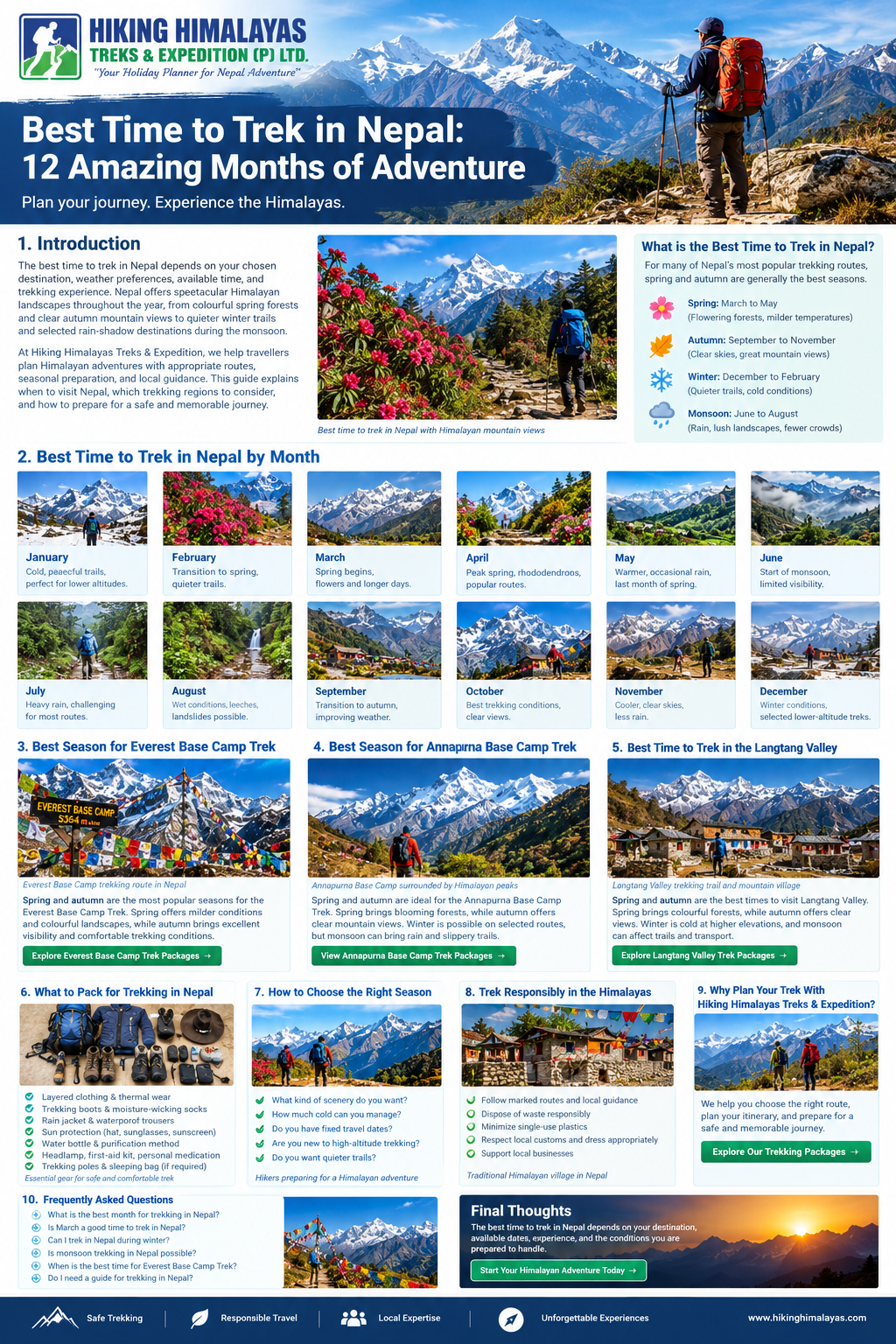
The best time to trek in Nepal depends on your chosen destination, weather preferences, available time, and trekking experience. Nepal offers spectacular Himalayan landscapes throughout the year, from colourful spring forests and clear autumn mountain views to quieter winter trails and selected rain-shadow destinations during the monsoon.
Whether you dream of reaching Everest Base Camp, exploring the Annapurna region, walking through Langtang Valley, or discovering remote Himalayan villages, choosing the right season can make your journey more comfortable and rewarding.
At Hiking Himalayas Treks & Expedition, we believe every successful Himalayan adventure begins with good planning. This guide explains the best months for trekking in Nepal, seasonal weather conditions, recommended routes, essential preparation tips, and how to choose a trek that suits your travel plans.
For many of Nepal’s most popular trekking routes, spring and autumn are generally the best seasons.
Spring usually runs from March to May, while autumn runs from September to November. These seasons often provide favourable conditions for mountain walking, although weather varies by altitude, region, and year.
Spring is a wonderful time to explore Nepal’s trekking trails. Forests become colourful with blooming rhododendrons, temperatures generally become milder at lower elevations, and mountain scenery can be spectacular.
Popular spring destinations include Everest Base Camp, Annapurna Base Camp, Langtang Valley, and Mardi Himal.
As the season progresses, temperatures rise in many areas. Afternoon clouds may also affect mountain visibility, and higher elevations can still experience snow and cold conditions.
Autumn is one of the most popular trekking seasons in Nepal. After the summer monsoon, many trails become greener, and clear days can offer excellent views of the Himalayan peaks.
October and November are particularly popular for routes such as Everest Base Camp, Annapurna Circuit, Manaslu Circuit, and Langtang Valley.
Because autumn attracts many visitors, popular trails and teahouses may become busy. Booking accommodation and trekking services ahead of time is a sensible idea.
Winter can be suitable for selected lower-altitude treks and travellers who prefer quieter trails. Days may be clear, but temperatures can fall sharply at night.
High passes and elevated trails may be affected by snow, ice, or extreme cold. Some routes may become impractical or unsafe depending on current conditions.
Choose a winter itinerary carefully and seek advice from an experienced local trekking team before travelling.
The summer monsoon brings frequent rain to much of Nepal. Trails can become muddy or slippery, leeches may be common in forested areas, and clouds can limit mountain views.
Landslides, flooding, and transport disruptions are possible during heavy rainfall.
However, the rain shadow areas of Upper Mustang and parts of the Annapurna region may offer alternatives because they receive less rainfall than many southern Himalayan slopes. Conditions still vary, and access and permit requirements must be checked before departure.
The following month-by-month guide can help you choose a suitable travel period. These are general seasonal patterns, not guarantees of weather or trail conditions.
January is one of the coldest months in the Himalayas. Lower-altitude routes may offer peaceful trails and clear winter scenery, but higher elevations can be extremely cold.
Consider shorter lower-altitude hikes around the Kathmandu Valley or carefully selected foothill routes. Some higher routes may require changes because of snow and freezing temperatures.
Best for: Lower-altitude walks, winter scenery, and travellers comfortable with cold weather.
February marks the gradual transition towards spring. Lower elevations can become more comfortable for walking, although high-altitude routes remain cold.
Late February may be a good option for selected lower and mid-altitude trails. Check conditions carefully before planning a trek involving high passes.
Best for: Quieter trails, lower-altitude trekking, and early-season adventures.
March is the beginning of spring trekking season. Temperatures generally improve at lower elevations, flowers begin to appear in some forests, and the days become longer.
Everest Base Camp, Annapurna Base Camp, and Langtang Valley may all be options, depending on current conditions and the route selected.
Higher elevations can still experience snowfall, so suitable clothing and flexible planning remain important.
Best for: Spring landscapes, forest walks, and longer Himalayan treks.
April is a popular spring trekking month. Rhododendrons may bloom across many hillsides, and many routes offer attractive mountain scenery.
Everest Base Camp, Annapurna Base Camp, Mardi Himal, and Langtang Valley are popular choices.
Because demand can be high, plan transport, accommodation, guides, and required permits in advance.
Best for: Spring flowers, classic Himalayan routes, and mountain photography.
May is the final month of spring. Lower elevations can become warm, while higher elevations may still be cold.
Clouds and pre-monsoon showers may become more frequent later in the month. Trekkers should be prepared for changing visibility and occasional rain.
Some travellers also consider Upper Mustang because of its relatively dry climate, subject to current access and permit requirements.
Best for: Early-May spring trekking and carefully planned rain-shadow destinations.
June marks the transition towards the monsoon season. Rainfall typically increases, particularly in many southern and central trekking areas.
Some routes may still be possible early in the month, but weather-related disruptions become increasingly important to consider.
Travellers interested in Upper Mustang should check regional conditions, transport access, and permit arrangements.
Best for: Flexible itineraries and selected rain-shadow routes, depending on conditions.
July is generally part of the main monsoon period. Heavy rainfall can affect trails, road travel, and mountain visibility across many regions.
For most classic trekking routes, this is a challenging time to plan a trip. A rain-shadow destination may be worth considering, but it is not completely protected from weather disruptions.
Best for: Carefully researched rain-shadow itineraries and travellers with flexible schedules.
August usually remains wet across much of Nepal. Landscapes can be lush and green, but leeches, muddy paths, landslides, and transport delays may affect travel.
If trekking during August, use a flexible itinerary and monitor weather conditions. Do not assume that a route is safe simply because it is open or popular.
Best for: Selected destinations with suitable seasonal conditions and flexible travel plans.
September is the transition from monsoon to autumn. Early September may still bring rain, while later in the month conditions often begin to improve.
The timing varies each year, so trekkers should check forecasts and local trail information before departure.
Best for: Travellers who can adjust their dates and want to visit during the transition into autumn.
October is widely regarded as one of the best months for trekking in Nepal. Many routes experience favourable walking conditions, and mountain views can be excellent.
Everest Base Camp, Annapurna Circuit, Annapurna Base Camp, Langtang Valley, and Manaslu Circuit are popular options.
October is also busy, so arrange trekking services and accommodation in advance.
Best for: Classic Himalayan treks, mountain views, and first-time visitors to Nepal.
November is another excellent month for many trekking routes. Post-monsoon skies may remain clear, while cooler temperatures become more noticeable, particularly at higher elevations.
Popular routes can still be busy early in the month. Later in November, cold conditions become increasingly important on high-altitude trails and mountain passes.
Best for: Clear mountain scenery, autumn landscapes, and classic trekking itineraries.
December brings winter conditions to the Himalayas. Lower-altitude treks may offer peaceful trails and crisp views, but high-altitude routes can become challenging due to snow and freezing temperatures.
Choose a route that matches your fitness, experience, equipment, and the current conditions.
Best for: Selected lower-altitude treks and travellers prepared for winter weather.
The Everest Base Camp Trek takes you through Sherpa villages, high-altitude landscapes, and the spectacular Khumbu region.
Spring and autumn are generally the most popular seasons for this adventure. Spring offers milder conditions than deep winter and the possibility of colourful landscapes at lower elevations. Autumn often brings excellent visibility and comfortable trekking conditions.
The route still involves high altitude, cold nights, and rapidly changing weather. Acclimatisation days are essential, and the itinerary should allow enough time to adapt to increasing elevation.
Read more about our trekking options on the Hiking Himalayas Treks & Expedition website and ask about an itinerary that matches your travel dates and experience.
The Annapurna Base Camp Trek leads through villages, terraced farmland, forests, and mountain valleys towards a dramatic Himalayan sanctuary.
Spring is known for flowering forests, while autumn often provides clear views and pleasant walking conditions. Winter may be possible on selected itineraries, but snow and cold weather can affect higher sections.
During the monsoon, rain, slippery trails, and landslides can complicate travel.
Before booking, consider your preferred scenery, available time, and comfort with changing mountain weather.
Langtang Valley offers mountain views, forest trails, local villages, and opportunities to learn about Himalayan culture.
Spring and autumn are usually the most popular seasons. Spring can bring colourful forests, while autumn may provide clear mountain views.
Winter conditions can be cold at higher elevations, and monsoon rainfall may affect trails and transport.
Choose dates that suit your fitness and experience, and confirm local conditions before departure.
Yes, trekking is possible in some parts of Nepal during the monsoon, but route selection becomes especially important.
Rain can affect trail safety, visibility, roads, and domestic transport. Some areas may experience landslides or flooding.
Upper Mustang is often considered by travellers looking for a relatively dry destination. However, weather, access, and route conditions still need to be assessed carefully.
If you plan a monsoon trek, build flexibility into your itinerary, carry appropriate rain protection, and consult a knowledgeable local operator.
Packing correctly helps you stay comfortable as temperatures and conditions change with elevation.
Your exact equipment will depend on the route, season, altitude, and accommodation style. For many treks, consider bringing:
For high-altitude treks, equipment should be selected according to expected temperatures and the advice of your trekking team.
The ideal season is not the same for every traveller. Before selecting dates, consider these questions.
What kind of scenery do you want?
Spring can be attractive for flowers and forest landscapes. Autumn is popular for mountain visibility, although weather can vary.
How much cold can you manage?
High-altitude temperatures may fall below freezing even during popular trekking seasons. Winter requires extra care.
Do you have fixed travel dates?
If your schedule is inflexible, choose a route with seasonal conditions that suit your dates and allow contingency time.
Are you new to high-altitude trekking?
First-time trekkers should prioritise a realistic itinerary, gradual acclimatisation, appropriate fitness preparation, and qualified guidance.
Do you want quieter trails?
Popular trekking months attract more visitors. Shoulder-season travel may be quieter, but it can involve less predictable weather.
Responsible trekking helps protect the natural environment and supports communities along Nepal’s trails.
Follow marked routes and local guidance, dispose of waste responsibly, minimise single-use plastics, and respect local customs. Ask before photographing people, dress appropriately at cultural and religious sites, and support local businesses when possible.
Choose trekking services that communicate clearly about safety, staff welfare, environmental practices, and the itinerary.
For official travel information, consult the Nepal Tourism Board. Check current entry and trekking permit requirements through the relevant official authorities before travelling.
Planning a Himalayan trek involves more than choosing a month. Route selection, altitude, fitness, accommodation, transport, equipment, and changing weather all influence your experience.
Hiking Himalayas Treks & Expedition can help you explore suitable trekking options and prepare for your trip. Discuss your preferred dates, experience, budget, and fitness level before choosing an itinerary.
Start by visiting Hiking Himalayas Treks & Expedition to explore available options and enquire about your Himalayan adventure.
A well-planned trek should match your abilities and priorities, with enough flexibility to respond to mountain conditions.
October is one of the most popular months because many trekking regions experience favourable conditions and good mountain visibility. April is another popular choice for spring scenery. Conditions vary by route and year.
Yes. March marks the start of spring, and many routes become attractive for trekking. Higher elevations can still be cold, and snow may affect some trails.
Neither month is best for every traveller. April is attractive for spring flowers, while October is popular for post-monsoon mountain views. The right choice depends on your destination and preferences.
Yes, selected lower-altitude routes can be suitable in winter. High-altitude trails and passes may be affected by snow and extreme cold, so check conditions and choose carefully.
Yes, but many regions experience heavy rain, slippery trails, and potential transport disruptions. Selected rain-shadow areas may be alternatives, depending on current conditions.
Spring and autumn are generally the most popular seasons for Everest Base Camp. High-altitude weather can change quickly, so acclimatisation and current route information remain essential.
For popular spring and autumn dates, booking well in advance is sensible, especially if you have fixed travel dates or need particular accommodation and transport arrangements. The lead time depends on your route and travel requirements.
Requirements vary by route and current regulations, including rules that apply to particular trekking areas. Check the latest official requirements before travelling and consider qualified local guidance for route planning, safety, and cultural understanding.
The best time to trek in Nepal depends on your destination, available dates, experience, and the conditions you are prepared to handle.
Spring and autumn are excellent starting points for many classic Himalayan treks. Winter may suit selected lower-altitude routes, while monsoon travel requires careful destination selection and flexibility.
Plan ahead, prepare suitable equipment, check current conditions, and choose an itinerary that allows time to acclimatise safely.
When you are ready to plan your journey, visit Hiking Himalayas Treks & Expedition to explore your options for trekking in Nepal and begin preparing for your Himalayan adventure.