Loading ...


Chase the sunrise above the clouds on the Ghorepani Poon Hill Trek—where every step leads to Himalayan magic.
Imagine waking up to golden rays of sunrise caressing snow-capped Himalayan peaks. You sip a warm cup of tea in a rustic teahouse as majestic Annapurna and Dhaulagiri ranges greet your gaze. This isn’t a dream—it’s the Ghorepani Poon Hill Trek, Nepal’s most scenic short trek that blends culture, adventure, and jaw-dropping views in just a few days. Whether you’re a first-time trekker or a seasoned traveler seeking a soulful journey, the Ghorepani Poon Hill Trek is your perfect escape.
Every step of the trail bursts with color—vibrant rhododendron forests, charming Gurung and Magar villages, and awe-inspiring mountain backdrops. In just 4–5 days, you’ll gain lifelong memories without needing to climb to extreme altitudes. The Ghorepani Poon Hill Trek is not just about reaching a destination—it’s about experiencing every heartbeat of the Himalayan spirit.
With every breath of crisp mountain air, with every panoramic view from Poon Hill’s summit at 3,210 meters, you’ll feel yourself reconnecting with nature and rediscovering your inner peace. So, lace up your boots, pack your camera, and answer the call of the Ghorepani Poon Hill Trek—where every sunrise writes a new story.
Discover the Beauty of the Ghorepani Poon Hill Trek
The Ghorepani Poon Hill Trek is one of Nepal’s most accessible and rewarding trekking experiences. Located in the Annapurna region, this short trek ranges between 4 to 6 days and is perfect for those who want a Himalayan experience without the intensity of high-altitude expeditions.
This trek starts from Nayapul, a short drive from the beautiful lake city of Pokhara. The trail takes you through picturesque villages like Tikhedhunga, Ulleri, Ghorepani, and Ghandruk—settlements rich in culture and tradition. Along the way, trekkers pass through rhododendron forests, rice terraces, and lush landscapes that change color with every season.
The highlight of the trek is the early morning hike to Poon Hill, which offers a 360-degree panorama of the Himalayas. From here, you can witness the stunning peaks of Annapurna South, Hiunchuli, Machhapuchhre (Fishtail), Dhaulagiri, and many others bathed in the golden hues of sunrise. It’s one of the most photographed views in the Himalayas—and for good reason.
Altitude sickness is rarely an issue on the Ghorepani Poon Hill Trek since the maximum elevation is just 3,210 meters. This makes the trek ideal for beginners, families, and those looking for a moderate adventure that combines natural beauty, cultural encounters, and well-marked trails.
Teahouses along the route offer warm hospitality, comfortable lodging, and hearty Nepali meals. Guides and porters are available for those who want extra support and insights into the region’s culture and landscape.
If you’re wondering whether the Ghorepani Poon Hill Trek suits your travel style and fitness level, the answer is probably yes.
This trek is designed for those who want to experience the grandeur of the Himalayas without committing to long and strenuous high-altitude treks. Whether you’re a solo traveler, couple, family with kids, or group of friends, this trek adapts to all kinds of adventurers.
Physically, the Ghorepani Poon Hill Trek requires a moderate level of fitness. You don’t need to be an athlete, but being comfortable with 4–6 hours of walking a day over uneven terrain is helpful. The most challenging section is the stone stair ascent to Ulleri, but with patience and breaks, it’s very manageable.
Mentally and emotionally, this trek offers much more than just exercise. It’s a journey through nature, culture, and self-discovery. You’ll meet local villagers, explore traditional lifestyles, and feel deeply connected to the land. If you’re someone who enjoys photography, bird watching, peaceful forests, and cultural interaction, this trek is made for you.
Additionally, the Ghorepani Poon Hill Trek is available almost year-round, with spring (March to May) and autumn (September to November) being the best seasons. Even winter treks are possible with the right gear, offering snowy landscapes and quieter trails.
So yes—the Ghorepani Poon Hill Trek is right for you if you want beauty, adventure, and serenity in one unforgettable journey.
Choosing the right trekking company can make or break your Himalayan adventure, and that’s why Hiking Himalayas Trek and Expedition stands out as your perfect partner for the Ghorepani Poon Hill Trek.
With decades of experience in organizing treks throughout Nepal, Hiking Himalayas Trek and Expedition is known for its commitment to safety, personalized service, and deep local knowledge. Our guides are government-certified professionals who not only lead the way but enrich your journey with stories, history, and cultural insights.
We believe in ethical tourism—supporting local communities, promoting eco-friendly practices, and ensuring every trekker has a safe and fulfilling experience. Our team arranges everything from permits to transport, accommodation, and meals, so you can focus on enjoying your Ghorepani Poon Hill Trek stress-free.
What sets us apart is our flexibility. Whether you want a standard itinerary or a custom-made trip, we design your trek to match your pace, preferences, and time frame. For solo travelers, families, or large groups, we ensure comfort, connection, and care every step of the way.
With Hiking Himalayas Trek and Expedition, your Ghorepani Poon Hill Trek becomes more than a hike—it becomes a cherished memory shaped by hospitality, adventure, and the magic of the Himalayas.
There’s something truly special about standing on Poon Hill, watching the sun rise over the Annapurna range, painting the mountains in shades of orange, pink, and gold. It’s a moment that stays with you forever—and it’s waiting for you now.
The Ghorepani Poon Hill Trek is your chance to step into the heart of the Himalayas, where every path tells a story and every view captures your soul. It’s easy to reach, ideal for all levels, and rich with cultural and natural wonders. You don’t need to climb Everest to feel the magic of Nepal—the Ghorepani Poon Hill Trek offers it in every footstep.
Book your Ghorepani Poon Hill Trek today with Hiking Himalayas Trek and Expedition. Let us guide you to unforgettable sunrises, heartwarming villages, and serene mountain trails. This is more than just a trek—it’s your Himalayan story waiting to unfold.
Don’t just dream it. Hike it. Experience the Ghorepani Poon Hill Trek—the Himalayas are calling!
The Ghorepani Poon Hill Trek is situated in the Annapurna region of Nepal, which is renowned for its stunning geographical features. Here’s some geographical knowledge about the land you will tread during this trek:
The Annapurna region is located in north-central Nepal, bordering the Tibetan Plateau. Ghorepani and Poon Hill are specific destinations within the broader Annapurna region.
The trek takes you through the foothills of the Annapurna and Dhaulagiri mountain ranges. These two ranges are part of the larger Himalayan Mountain system.
The trek’s starting point is typically in Nayapul (around 1,100 meters or 3,609 feet), and the highest point reached is Poon Hill (3,210 meters or 10,531 feet). The moderate altitude makes it accessible to trekkers of varying experience levels.
The trail covers a variety of terrains, including lush subtropical forests, terraced fields, and alpine landscapes. You’ll pass through charming villages and cross suspension bridges over rivers and streams.
The Annapurna region is incredibly biodiverse. In the lower regions, you’ll find lush forests of rhododendron, oak, and pine trees. This area is also home to various wildlife species, including Himalayan tahr, snow leopards, and several bird species.
The trek follows the course of the Modi Khola River and its tributaries. You’ll encounter picturesque waterfalls and rivers along the way, including the famous Ghandruk and Tadapani waterfalls.
The region is inhabited by diverse ethnic communities, including Gurung, Magar, and Brahmin-Chhetri. Each group has its own unique culture, language, and traditions. This cultural diversity adds depth to the geographical landscape.
One of the main highlights of the trek is the opportunity to witness stunning views of the Annapurna and Dhaulagiri mountain ranges. Poon Hill, in particular, offers a breathtaking panoramic view of these peaks during sunrise.
Due to the significant variation in altitude, the weather can change rapidly. In lower regions, you’ll experience a subtropical climate, while higher up, temperatures can drop considerably, especially during the night.
The Annapurna Conservation Area, through which the trek passes, is the largest conservation area in Nepal. It is home to diverse ecosystems and protected wildlife species.
Understanding the geographical features of the Ghorepani Poon Hill Trek not only enhances your appreciation of the natural beauty but also helps you prepare for the changing landscapes and climates you will encounter during your trek in this remarkable part of the world.
The Ghorepani Poon Hill Trek typically takes 10-12 days, depending on your starting and ending points and the pace of your trek. It’s a relatively short trek compared to some of the more extended treks in Nepal, making it ideal for travelers with limited time.
– Spring (March to May): Ideal for rhododendron blooms and clear mountain views.
– Autumn (September to November): Offers stable weather and excellent visibility.
This trek is considered moderate in terms of difficulty. While it involves steep ascents and descents, it doesn’t require previous trekking experience. A reasonable level of fitness and acclimatization are essential.
You will need two permits for this trek: Annapurna Conservation Area Permit (ACAP) and Trekkers’ Information Management System (TIMS) card. These can be obtained in Kathmandu or Pokhara.
The facilities and accommodation along the Ghorepani Poon Hill trek have improved over the years due to its popularity among trekkers. However, it’s important to note that the level of comfort and amenities can vary depending on the specific teahouse or lodge you choose. Here’s an overview of the facilities and accommodation you can expect on the trek:
The trek mainly offers teahouse accommodation, which are basic lodges run by local families. Teahouses provide a bed with blankets, pillows, and usually a shared bathroom. Bedding may be clean but simple. Accommodation facilities can be quite basic, and rooms may not have heating. In higher-altitude areas, rooms can get very cold at night, so it’s advisable to bring a good-quality sleeping bag. Most teahouses have communal dining areas where you can enjoy meals and socialize with other trekkers.
Teahouses along the trail offer a variety of food options, including Nepali, Tibetan, and some Western dishes. Common food items include dal bhat (rice and lentils), momo (dumplings), noodles, soups, and potatoes.
While the food is generally safe, it’s recommended to avoid uncooked vegetables and consume bottled or treated water to prevent waterborne illnesses.
– Most teahouses have shared bathrooms with squat toilets. These facilities may not always have running water, especially in colder weather.Hot showers are available in some teahouses for an additional fee but be prepared for the water to be heated with solar or gas, so it may not always be very hot.
Some teahouses have electricity, but it’s not guaranteed. They may charge extra for charging your electronic devices, and power outages are common.Consider bringing a portable charger or a power bank to ensure you can keep your devices charged.
Limited Wi-Fi access is available in some teahouses for a fee, but the connection may be slow and unreliable. Don’t rely on it for essential communication.
The quality of teahouse accommodation can vary from basic to relatively comfortable, with thicker mattresses and more amenities. During peak trekking seasons (spring and autumn), it’s a good idea to make advance reservations for accommodation to secure a bed, especially in popular villages like Ghorepani.
At higher altitudes, such as Ghorepani and Poon Hill, accommodation may be more basic, and you should be prepared for colder temperatures. Acclimatization days are essential to avoid altitude sickness.
While facilities are generally basic along the Ghorepani Poon Hill trek, this adds to the charm of the experience, allowing you to connect with the local culture and appreciate the simplicity of life in the Himalayan villages. Trekkers should come prepared with the appropriate gear and expectations for a rustic but rewarding trekking adventure.
Alternative Treks You Can Consider in Ghorepani Poonhill Trek:
While the Ghorepani Poon Hill trek is a fantastic option, there are several alternative treks and variations in the same region that you can consider exploring the Annapurna foothills and experience the rich culture of Nepal. Here are a few alternatives:
The Annapurna Base Camp trek is another popular trek in the Annapurna region. It takes you deep into the Annapurna Sanctuary, offering stunning views of Annapurna and Machapuchare (Fishtail) peaks. This trek is slightly longer and more challenging than the Ghorepani Poon Hill trek but equally rewarding.
The Mardi Himal trek is a relatively new and less crowded trekking route in the Annapurna region. It offers incredible views of Mardi Himal, Machapuchare, and Annapurna ranges. This trek takes you through pristine forests and charming villages.
The Khopra Danda trek is a quieter and less-trodden route that offers breathtaking mountain vistas and a unique cultural experience. You can stay in community-run lodges and interact closely with local communities.
The Royal Trek is a short and easy trek that takes you through terraced fields, lush forests, and traditional villages. It was named after Prince Charles and his 1980 visit. This trek is suitable for beginners and offers a glimpse of rural life in Nepal.
This trek is focused on exploring the Gurung culture and traditions in the Annapurna region. It includes visits to Gurung villages, cultural performances, and an opportunity to learn about their way of life.
This trek takes you to the town of Tatopani with its natural hot springs and continues to Jomsom, offering a unique combination of natural relaxation and cultural exploration.
Remember that the difficulty and duration of these treks can vary, so it’s important to choose one that matches your fitness level and time constraints. Additionally, consider the best season for trekking, as weather conditions can affect your experience. It’s advisable to hire a local guide and be well-prepared in terms of gear and permits for any trek in the Annapurna region.
1. Poon Hill Sunrise: Witnessing the breathtaking sunrise from Poon Hill (3,210 meters) is undoubtedly the pinnacle of this trek. As the first light of day touches the Annapurna and Dhaulagiri mountain ranges, you’ll be treated to a mesmerizing panoramic view of snow-capped peaks bathed in golden hues.
2. Natural Beauty: Trekking through lush rhododendron forests, bamboo groves, and verdant hillsides is a highlight of the journey. The trek showcases the diverse and pristine natural beauty of the Annapurna region, especially during the spring when rhododendron flowers are in full bloom.
3. Traditional Villages: The trail takes you through charming Gurung and Magar villages, including Ghorepani, Ghandruk, and Tadapani. These villages provide an opportunity to immerse yourself in the local culture, interact with friendly inhabitants, and experience their traditional way of life.
4. Teahouse Experience: Accommodation along the trek is in teahouses run by local families. Staying in these teahouses allows you to experience the warmth and hospitality of the Nepali people, savor local cuisine, and connect with fellow trekkers.
5. Cultural Encounters: You’ll have the chance to visit Buddhist monasteries, prayer wheels, and ancient monastic settlements along the trail. These cultural encounters provide insight into the spiritual practices and traditions of the region.
6. Hot Springs Relaxation: Depending on your chosen route, you may have the opportunity to relax in natural hot springs in Jhinu Danda. Soothe your muscles and unwind in these therapeutic waters while surrounded by lush forests.
7. Local Markets: Depending on the timing of your trek, you may come across local markets in the villages. These bustling markets are a great place to purchase handcrafted souvenirs, interact with locals, and sample authentic Nepali snacks.
8. Scenic Mountain Views: Throughout the trek, you’ll enjoy stunning mountain vistas. The Annapurna and Dhaulagiri ranges dominate the skyline, and you’ll have the chance to admire these majestic peaks from various viewpoints.
9. Photography Opportunities: The trek offers countless opportunities for photography. From sunrise vistas to terraced fields, charming villages, and vibrant rhododendron blooms, every step of the journey presents a stunning photo backdrop.
10. Sense of Achievement: Completing the Ghorepani Poon Hill trek is a rewarding experience, especially for beginners. It provides a sense of accomplishment, and the memories of this trek will last a lifetime.
The Ghorepani Poon Hill trek combines natural beauty, cultural immersion, and a physical challenge, making it a must-do trekking experience for those exploring the Annapurna region of Nepal.
Landing in Kathmandu is quite an experience. The views of the Mountain ranges from the window seat of the airplane are totally amazing. In your trekking to Ghorepani – Poonhill you’ll see such views but from a close quarter.
Following your arrival at Tribhuvan International Airport, You’ll be welcomed to Nepal by a representative of Hiking Himalayas at TIA’s arrival terminal. We’ll transfer you to the hotel in a private car.
Overnight Stay in Kathmandu.
The scenic drive from Kathmandu to Pokhara(200 km) takes approximately 7 hours by tourist bus. We’ll leave from Kathmandu around 7;00 o’clock in the morning and have our lunch on the way to Pokhara(822m). You’ll arrive at Pokhara at approximately 2:00 o’clock. Pokhara lakeside sits, at the “front row center” of one of the most beautiful Himalayan panoramas in the world. The Annapurna and famous “Fishtail” mountain peak of Machapuchhare tower over the tropical setting of Pokhara and the time you spend there will be the scenic highlight of your trip. You’re free in Pokhara Valley also called the “Magic Land” or Dreamland” of Nepal, to explore the various interesting place of your own like boating in Fewa lake while looking at the Annapurna Range of the Himalayas. In the evening you will prepare yourself for your trek to Poon Hill.
Overnight Stay in Pokhara.
After Breakfast, we’ll drive toward Nayapul; the starting point of our trek which will take about one and a half hours. Crossing the suspension bridge over the Modi Khola river, we ascend slowly through terraced fields and classic mountain villages. Along the way, we will encounter mule or goat caravans carrying supplies to the mountains, heralded by the musical bells they wear. The stunning peaks of Machhapuchare and Annapurna peaking over the green ridges will greet us from time to time as we continue up to Tikhedhunga.
In the 5 hours of trek, we’ll walk along the Bhurungdi river, through the Lush forest, Hospitable Locals and Tea houses, and the charming Villages of Birethati(1025m), the hamlet of Matathanti, Hile, and finally Tikhedhunga(1480). Along the trail, you’ll enjoy the views of the Silvery mountains.
Overenight Stay in Tikhedhunga.
Today begins as a real heart-starter! After breakfast, we’ll hit the trail and take a steep ascent to get us going, and a more gradual uphill walk takes us to our Ghorepani(2775m). We will pass through some delightful villages and the beautiful, dense rhododendron forest – the characteristic of Nepal at these altitudes! If the weather is clear we will see stunning mountain views from Ghorepani, making the climb worth it! At Ghorepani, we are on the Annapurna Circuit route and there are likely to be lots of travelers passing through this ridge-top settlement in both directions. Ghorepani literally means “horse water” and is a popular stopping place for the mule trains which ply the route from Pokhara to Jomsom and beyond. The impressive peak which can be seen across the broad valley of the Kali Gandaki to the northwest is Dhaulagiri.
Overnight Stay in Dhaulagiri.
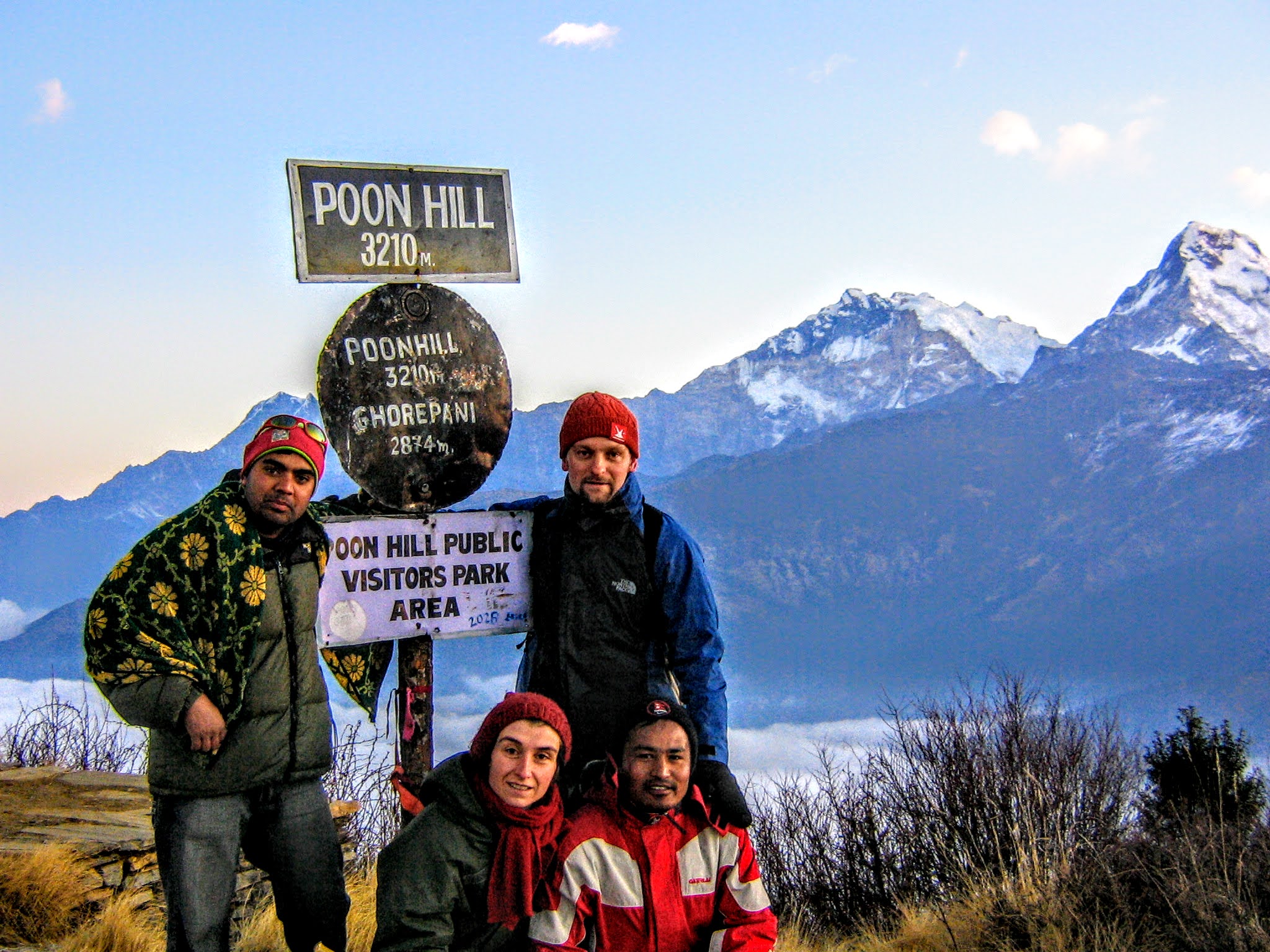
It is an absolute must for those who stay at Ghorepani to make the walk up to the celebrated viewpoint of Poon Hill(3210m), which overlooks the village. Dawn is the best time to go so we arrange a wake-up call for 5 am and head up the well-marked track. The first light of dawn illuminates Dhaulagiri(8167m) and Tukuche Peak (6920m) with a surreal pink glow.
You may be able to buy coffee in Poon Hill to take advantage of the morning trade. After the views, we return to Ghorepani for breakfast, before trekking on to Tadapani(2630m) through the rhododendron forest. If we are lucky we’ll see some wild animals, such as langur monkeys climbing through the trees. We’ll trek through the village of Deurali, Banthati(3100m)before reaching Tadapani. There are excellent views of Annapurna South(7219m), Hiunchuli(6441m), and Machhapuchhare (6,993m) from Tadapani.
Overnight Stay in Tadapani.
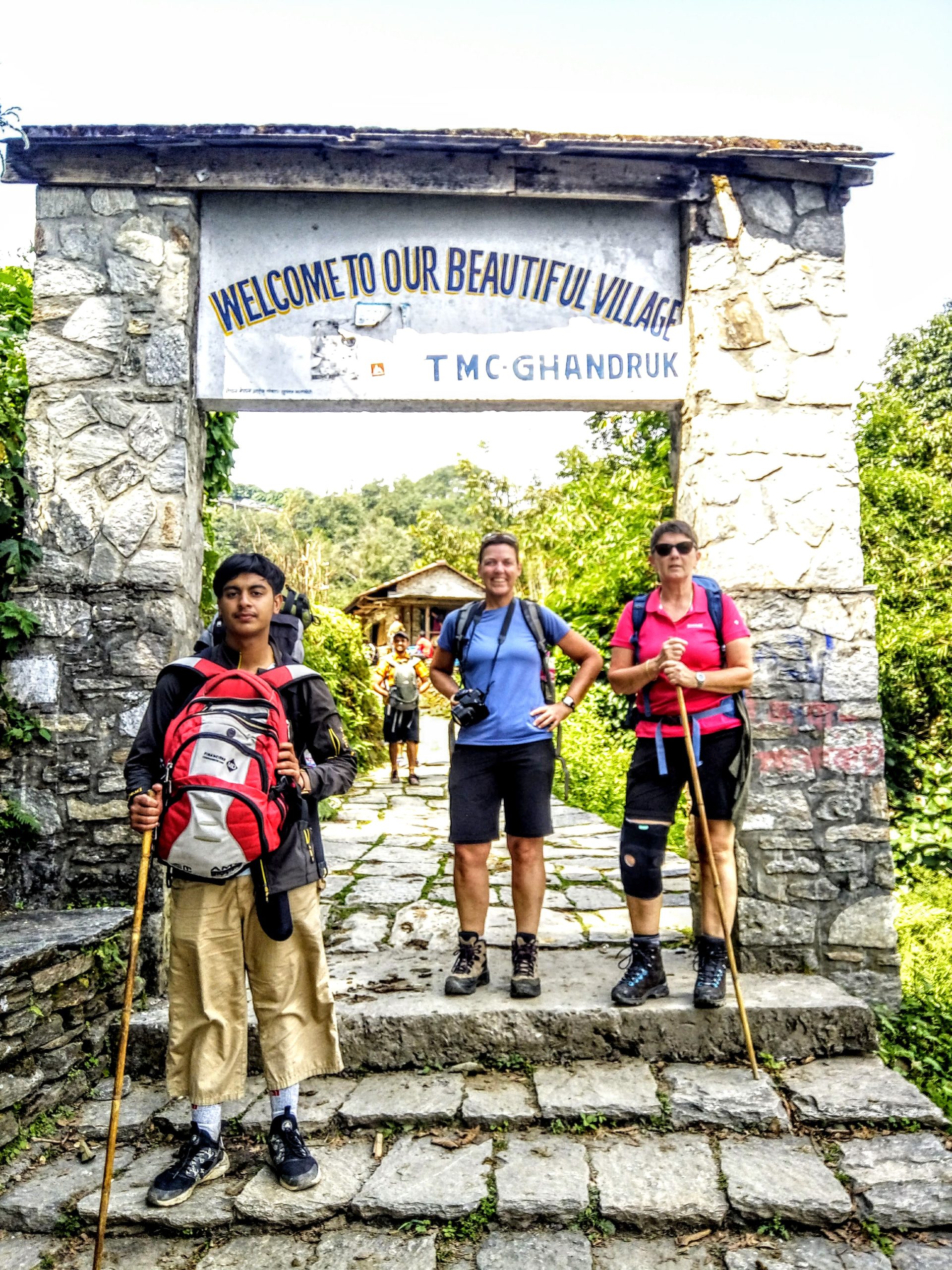
From Tadapani the trail descends through beautiful forests to Ghandruk(2012m), the village of the Gurung ethnic people of Nepal, known for their distinctive dialect, culture, costume, and lifestyle. Ghandruk is also home to many soldiers from the famous Gurkha regiments. From here we can have stunning views of Annapurna south, Hiunchuli, Gangapurna, AnnapurnaIII, and Fishtail. You may visit Old Gurung Museum. This is the 2nd largest Gurung village in Nepal.
Overnight Stay in Ghandruk.
After breakfast, we’ll enjoy a final downhill walk through forest and villages for about 5 hrs to Nayapul. This will be the last trek of our trip. From here we drive for about 1 hour back to Pokhara(822m) where our trek ends and we can enjoy a shower and relax in the stunning lakeside town enjoying the memories!
Overnight Stay in Pokhara.
Leaving footprints in the trails and preserving the memories of the Annapurna Region, we’ll drive towards Kathmandu. You’ll enjoy the curvy roads of Nepal’s hills and its greenery along the way. We’ll drop you off at the hotel and the day is over. You could do some last-minute shopping and packing, send a few postcards home or even go down for a stroll to Thamel, an internationally known hub for tourists in Asia.
Overnight stay at Kathmandu.
After breakfast, we’ll visit Swayambhunath Stupa, said to be 2000 years stupa on a hillock that offers a breathtaking view of Kathmandu City. We will then proceed to visit Pasupatinath and Bouddhanath. After lunch, we’ll visit Kathmandu Durbar Square, Patan (Lalitpur) – which is the oldest of the three major cities in Kathmandu Valley – famous for its Buddhist monuments and Hindu temples, and you can catch the traditional artisans working with wood, stones, and metals.
After we finish Sightseeing, You’ll be gifted with an evening farewell dinner in a traditional way and many other surprises, for they’ve had a quality time with you.
Overnight Stay in Kathmandu.
Our Nepalese support team will take you to the airport for your flight home. (Or stay longer for short tours such as a drive to National parks, do some wild-water rafting, a Tibet tour, or even mountain biking, etc – please don’t hesitate to let us know. We would be glad to help you. Thank you for doing this venture with us & it’s been wonderful knowing you over the weeks. Please do stay in touch in the months ahead. BonVoyage & take care!!!
Or,
Extend Your Stay in NEPAL
Not satisfied with this regular itinerary? Make your own.

Packing appropriately for the Ghorepani Poon Hill trek is essential to ensure your comfort and safety during the journey. Here’s an equipment checklist to help you prepare for the trek:
Clothing:
1. Moisture-Wicking Base Layers:
– Synthetic or merino wool base layers to keep you dry and warm.
2. Insulating Layers:
– Fleece or down jackets to provide warmth during cold evenings and mornings.
3. Outer Shell:
– Waterproof and windproof jacket and pants to protect against rain and wind.
4. Trekking Pants:
– Lightweight and comfortable trekking pants (convertible pants are a bonus).
5. Trekking Shirts:
– Quick-drying and breathable trekking shirts (long-sleeve and short-sleeve options).
6. Headwear:
– Warm hat, sun hat, and a buff or neck gaiter to protect against cold and sun.
7. Gloves:
– Insulated gloves for colder sections of the trek.
Footwear:
8. Hiking Boots:
– Sturdy and waterproof hiking boots with good ankle support.
9. Hiking Socks:
– Moisture-wicking and comfortable hiking socks (carry extra pairs).
10. Gaiters:
– Optional but useful for keeping debris and snow out of your boots.
Backpack:
11. Daypack:
– A small daypack for carrying essentials during daily hikes.
Sleeping Gear:
12. Sleeping Bag:
– A warm, season-appropriate sleeping bag suitable for teahouse accommodation.
13. Sleeping Bag Liner:
– Optional but can add extra warmth and hygiene.
Trekking Accessories:
14. Trekking Poles:
– Collapsible trekking poles for balance and support.
15. Headlamp/Flashlight:
– With extra batteries, as teahouses may have limited lighting.
16. Sunglasses:
– High-quality sunglasses with UV protection.
17. Water Bottles or Hydration System:
– At least two reusable water bottles or a hydration bladder.
Toiletries:
18. Toilet Paper and Trowel:
– Many teahouses have basic facilities, but it’s a good idea to carry your own toilet paper and a small trowel for sanitation.
19. Personal Hygiene Items:
– Toothbrush, toothpaste, soap, hand sanitizer, and any personal medications.
Miscellaneous:
20. First Aid Kit:
– Include basic supplies like adhesive bandages, pain relievers, blister treatment, and any personal medications.
21. Trekking Permit and Documentation:
– Ensure you have all necessary permits and identification documents.
22. Money and Wallet:
– Carry enough cash (Nepali Rupees) as ATM access is limited along the trail.
23. Maps and Guidebooks:
– Maps or a guidebook of the trekking route can be helpful.
24. Snacks:
– Energy bars, trail mix, and snacks for the trail.
25. Camera and Electronics:
– Camera, spare batteries, and charging equipment.
26. Plastic Bags:
– Ziplock bags or dry bags for keeping items dry in case of rain.
Remember that you can purchase or rent many trekking gear items in Kathmandu or Pokhara if you don’t have them already. It’s essential to pack light and efficiently, as you’ll be carrying your own gear during the trek. Prioritize quality, especially for clothing and footwear, to ensure your comfort and safety on the trail.
With more than 20+ years of experience in the tourism industry, our agency is registered under the Ministry of Tourism. It is also a license holder of NMA, NTB, and NRB. We also provide you with local guides, who are used to the surroundings, so you won't face any difficulties in the trek.
This trek is considered moderately challenging. You'll have to walk for longer distances and up to 5 hours per day to complete this trek. You won't have a hard time completing this trek if you're physically fit.
Based on your satisfaction and the guides' behavior you can tip the guides. We suggest you tip up to 15% of the total trip cost to the guides.
Yes, you'll get internet facilities everywhere on this trek. But, you may have to pay extra charges to use it. And the internet may not be that fast.
Poonhill is famous for its Panoramic view of the Annapurna and Dhaulagiri Mountain Ranges. People mostly visit here for the insane sunrise and sunset seen from the Himalayas.
Poonhill trekking is perfect for those with less time and who want a Himalayan adventure. This is suitable for people who just got into trekking as this is not that hard trek.
All Inclusive Price.
Do not hesitage to give us a call. We are an expert team and we are happy to talk to you.